Uganda Gambling Industry has recorded remarkable growth over the past three financial years, with sector turnover rising from approximately UGX 500 billion in FY2021/22 to an estimated UGX 8 trillion by FY2024/25. The significant increase reflects the sector’s rapid expansion and highlights the need for a regulatory framework capable of keeping pace with a modern, technology-driven gaming market.
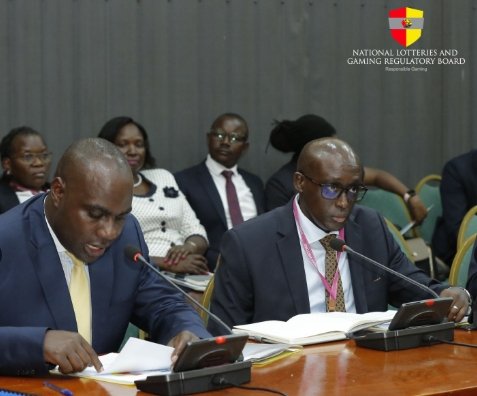
According to the National Lotteries and Gaming Regulatory Board (NLGRB), the industry’s transformation has reinforced the importance of moving beyond traditional regulatory approaches.
As gaming activity continues to grow, the regulator says modern oversight mechanisms are essential to maintaining transparency, improving compliance, and safeguarding the integrity of Uganda’s regulated gaming sector.
To support this growth, Uganda has introduced a harmonized tax framework aimed at ensuring the industry’s expansion is captured fairly while strengthening regulatory oversight. The framework is designed to improve tax administration, enhance compliance among licensed operators, and ensure gaming revenues contribute meaningfully to national development priorities, including infrastructure, healthcare, education, and other public services.
A key pillar of the sector’s transformation has been the deployment of the National Central Electronic Monitoring System (NCEMS), which enables the NLGRB to monitor gaming transactions in real time. The technology has improved regulatory visibility, strengthened revenue accountability, and enhanced the Board’s ability to detect non-compliance while promoting greater transparency across the licensed gaming market.
The sector’s growth has also translated into stronger government revenue. According to figures released by the NLGRB, annual gaming tax collections have increased significantly in recent years, driven by improved enforcement, digital monitoring, licensing reforms, and higher levels of operator compliance. These measures have contributed to the formalization of the industry while creating a more level playing field for licensed operators.
The NLGRB continues to work closely with the Uganda Revenue Authority (URA) and other government agencies to strengthen oversight, improve compliance, and support the effective implementation of tax reforms. The regulator maintains that collaboration between public institutions and licensed operators will be critical to ensuring sustainable growth as Uganda’s gaming market continues to evolve.
With the sector expanding at an unprecedented pace, the NLGRB says a modern, technology-enabled regulatory framework is essential to balancing industry growth with accountability. The Board remains committed to fostering a transparent, well-regulated gaming environment that supports responsible gaming, protects public interest, and contributes to Uganda’s long-term economic development.