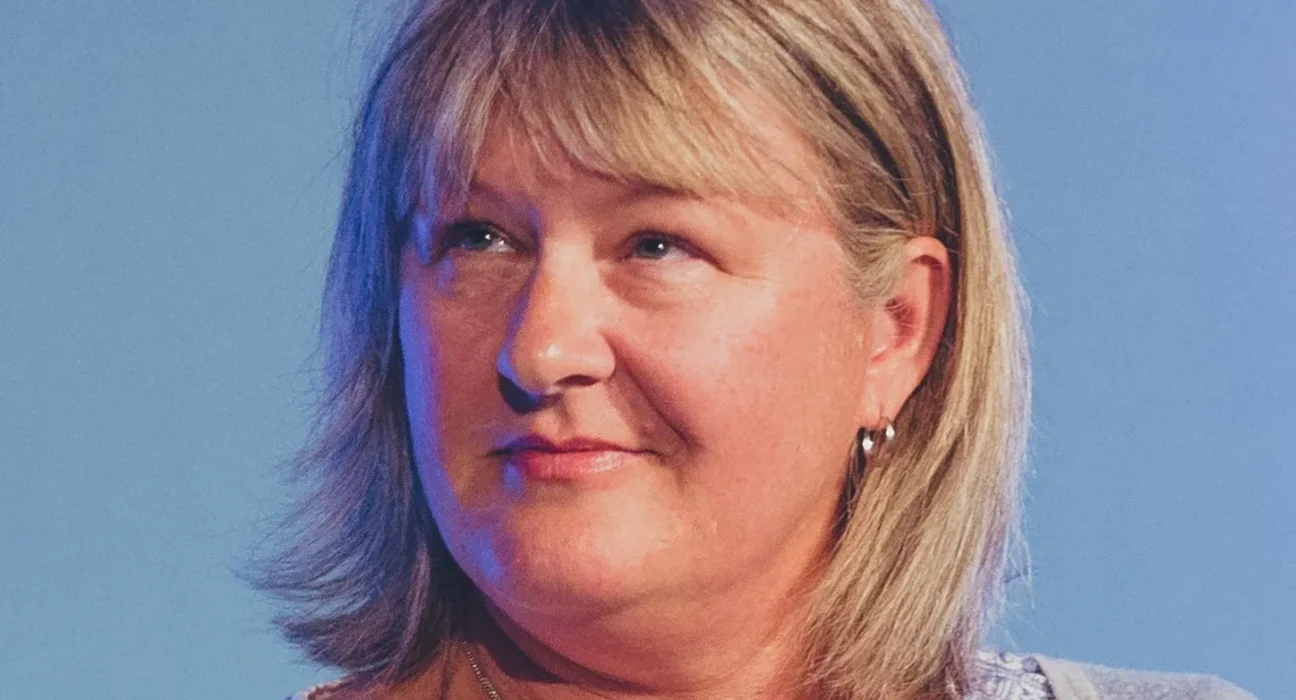
With decades of experience across the global gaming and events industry, Kate Chambers brings a perspective shaped by leadership, commercial strategy and industry development. As Founder of Gaming Boardroom, Executive Advisor to Clarion Gaming, Managing Director of Fulwood Media, and through her experience at United Business Media, Chambers understands the business of bringing industries together.
But the events industry faces an important question: beyond impressive venues, packed exhibition halls and ambitious attendance claims, what measurable value do these gatherings deliver to exhibitors, sponsors, investors and attendees?
In an industry where credibility drives commercial confidence, transparency should not be optional. Attendance figures, exhibitor numbers, decision-maker participation and demonstrable business outcomes matter because they help stakeholders evaluate return on investment.
The argument is straightforward: if an event is genuinely worth running and worth attending, there should be no reason to hide the numbers behind it. For gaming events, transparency is not a threat to reputation; it is the foundation of lasting credibility.
You spent years leading Clarion Gaming at a time when gaming events became increasingly strategic to the industry. What did you learn about the real economic value of a major gaming event, and where do organisers today overstate that value?
Bringing people together is valuable in any industry, but only when there’s a genuine reason for them to be in the room: real change happening, or a part of the industry that needs recognising and doesn’t yet have a platform for it. What I see too often is organisers using a tier-one brand to do something quite different: build a private empire of perceived influence, relying on a small circle of friendly exhibitors and sponsors to keep turning up, while dressing it up as industry leadership rather than admitting it’s really about growing their own brand. That’s the overstatement. The event isn’t serving the industry’s actual need any more, it’s serving the organiser’s. And increasingly, the industry can tell the difference between a brand doing that work and the individual relationships actually doing it, which is exactly why those relationships are worth more than any single calendar date.
You have now founded Fulwood Media and The Gaming BoardRoom. What gap in the gaming industry did you see that convinced you to build something outside the traditional events model?
The pandemic, honestly. I was running the global gaming division of one of the world’s largest events businesses, the fastest growing and largest annual division the company had, and when every event stopped running overnight, it became very clear very quickly what the real need for a highly experienced, highly paid divisional MD actually was: redundancy. That’s not a cynical answer, it’s the honest one. It forced me to ask a harder question: was the industry relationship built around me, or around the event itself? I’d built that division into the biggest gathering of its kind in gambling, and when the model disappeared overnight, the people who mattered to the industry didn’t stop calling, they just started calling for different reasons. That told me where the real value had been sitting all along. The Gaming BoardRoom came out of that. It’s the first of more than one thing I’m building right now, and I’d rather let the next few months speak for themselves than announce it here.
The gaming industry is increasingly questioning attendance figures, exhibitor numbers and claims about decision-makers at major events. What metrics should sponsors and investors demand before they consider an event commercially credible?
Real attendance, against established and consistent metrics, not numbers invented for the pitch. And a way to question ROI on their own terms, not the organiser’s. Every company sponsoring or exhibiting has different objectives and different people they actually want in the room, so when an organiser hides behind broad attendance or exhibitor numbers instead of letting sponsors interrogate the numbers that matter to them, that’s not clever marketing, it’s disingenuous. If an event is genuinely worth running and worth attending, there’s no reason to hide the real numbers behind it. The sponsors who’ve been doing this longest already know that the real credibility sits with specific people they trust inside an organisation, not with the brand on the banner, and they’re right to look there first.
Do you believe the traditional exhibition model, large stands, sponsorship packages and thousands of attendees, is still sustainable, or is the industry moving toward smaller, highly curated and intelligence-driven business gatherings?
Both can work, but only one of them is honest about what it’s actually selling. A large exhibition is sustainable when the scale genuinely matches the industry’s need, when there’s real change happening and the size of the room reflects how many people that change actually touches.
What isn’t sustainable is using size as a proxy for value, selling the stand and the sponsorship package first and working out afterwards whether anyone needed to be there. That’s where the smaller, curated model is winning ground, not because big is bad, but because a room built around a specific decision or a specific problem is easier to prove the value of than a room built around filling square metres. I don’t think the exhibition model dies. I think the ones that survive will be the ones who stop pretending attendance numbers are the same thing as relevance.
From your experience at the highest level of gaming events, what separates an event that genuinely creates business from one that simply creates noise, footfall and social-media content?
Creating genuine moments for people to do business, which starts long before the show floor opens. You need to understand why the event is actually needed, invite the right people, and vet exhibitors properly rather than just selling square metres to anyone who’ll pay for them.
Let the event be whatever size it genuinely needs to be, and price accordingly, instead of getting pulled into the trap of justifying scale through entrance fees or stand pricing alone. The real question is simple: what do people need to get out of being there? Ask them.
Build the event around delivering that, then price it appropriately. Everything else, the footfall, the social content, follows from getting that right, it never substitutes for it. None of that depends on a big organisation behind it, it depends on someone who already knows what the room actually needs.
Africa is becoming one of the most aggressively pursued emerging gaming markets. What do international companies still fundamentally misunderstand about doing business in Africa?
That it’s one market. It isn’t, and with everything shifting across Latin America too, that misunderstanding is only going to get more expensive to hold onto. Africa is a continent of genuinely diverse, culturally rich societies, each needing different outcomes, operating at different commercial levels, with different cultures and different regulatory realities.
If you can’t adapt and serve each of those markets with real commitment, what you’re running is a vanity project, and it either fails outright or makes short-term money with no long-term future. The companies that succeed are the ones who work out what their actual end goal is for the continent, then work hard at making that effective market by market, rather than importing one playbook and hoping it travels.
With Africa attracting operators, suppliers, investors and event organisers from around the world, do you think the continent needs more international events, or stronger African-owned platforms capable of controlling the industry’s narrative?
Home-grown talent, run by people who understand the culture and the needs in a way nobody flying in can match. That’s always the stronger foundation. But there’s real value in borrowing effective skills, thinking and practice from international markets too, there’s no point reinventing the wheel. The smartest approach takes what already works elsewhere and makes it fit better and run faster, using your own knowledge, your own instinct and your own data, rather than either copying wholesale or refusing to learn from outside at all.
You have moved from running a major global gaming-events business to building The Gaming BoardRoom. How has that transition changed your view of leadership, influence and where the real decisions in gaming are made?
It’s confirmed something I already believed but had to prove to myself once the scale and the title were gone: the decisions were never really made on a show floor, they were made in relationships built over years of being firm but fair, and trust travels with the person who earned it, not with whichever brand is paying for the stand that year. People only tell you what’s really going on if they trust you to hold it, and that kind of trust takes years to build and almost no time to lose.
Leadership in this industry now looks less like running the biggest room and more like being the person certain conversations happen with regardless of which room you’re in. My answer to that has been to keep searching, keep initiating, keep testing, and build my own industry standing around myself rather than around any one platform’s name.
Gaming is becoming increasingly intertwined with technology, AI, fintech, regulation, cybersecurity and investment. If you were designing a major industry platform from scratch today, what would you do differently from the traditional gaming exhibition?
I’d stop designing for footfall and start designing for the decision itself. A traditional exhibition sells a stand and hopes the right conversation happens near it. I’d build around the specific problem someone is actually trying to solve, whether that’s a licensing decision, a payments review, or a responsible gambling framework, and work backwards from there, rather than working forwards from how much floor space I can sell. Scale stops being the thing you sell and becomes whatever size genuinely serves that purpose.
The detail of how you actually deliver that is the part worth protecting rather than publishing, but the principle is simple: design around what someone needs to decide, not around how many people you can get in a room.
Looking five years ahead, what is the biggest structural change you expect to see in the global gaming industry, and what opportunities should investors, technology companies and African businesses be positioning for now?
The industry will keep splitting away from the idea that physical scale equals influence. The organisations that matter in five years will be the ones who’ve built real trust with the people actually making decisions, not the biggest stand or the longest delegate list. For investors and technology companies, that means the opportunity sits with platforms and tools that prove their value through outcomes, not attendance.
For African businesses specifically, it means the window to build home-grown platforms with genuine regional credibility is open now, before international players import a one-size-fits-all model and make that harder to compete with later.