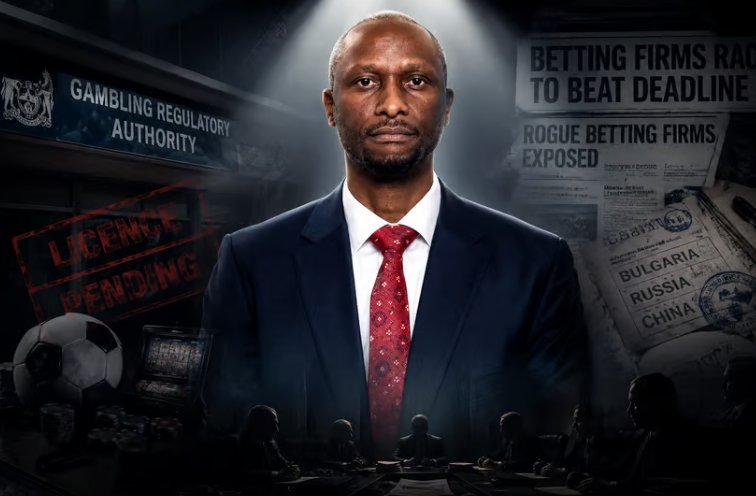
COFEK says it will join the legal challenge aimed at removing the Gambling Regulatory Authority (GRA) Director General, Peter Maina Karimi, warning that unresolved questions about his leadership could affect more than 15 million Kenyans who participate in betting and gaming.
The Consumers Federation of Kenya (COFEK) announced it will seek to be joined as an interested party in a constitutional petition filed by Patrick Mwashigadi in the High Court’s Constitutional and Human Rights Division.
While the original petition focused on whether Karimi met the legal requirements to be appointed, COFEK says its intervention broadens the dispute into a wider public-interest matter. It frames the case around consumer protection, regulatory independence, and alleged conflicts of interest within Kenya’s gambling regulator.
COFEK argues that any uncertainty over the regulator’s leadership could weaken licensing and enforcement, reduce responsiveness to consumer complaints, and undermine responsible gambling safeguards—particularly protections for vulnerable groups, including minors and people affected by gambling addiction.
It also says it will ask the court to ensure that, even if the appointment is found defective, the regulator continues carrying out its statutory functions. COFEK further wants the court to direct the GRA Board to begin an expedited, lawful, transparent and merit-based recruitment process if the appointment is overturned.
COFEK argues that the GRA must be led by someone whose independence is not in question and whose position avoids any actual or perceived conflict with licensed betting firms.
It points to the upcoming compliance and licensing timetable, noting that the authority must publish the licensing register for 99 gambling operators by June 30. COFEK says only days before that deadline, uncertainty over Karimi’s tenure increases scrutiny and raises public confidence concerns.
Karimi was appointed Director General on February 26, 2026, following recruitment led by the GRA Board chaired by Joseph Kirui Limo. The board cited Karimi’s experience in areas such as gaming, telecommunications, mobile technology, digital payments and financial services.
But the appointment has faced legal challenge under the Gambling Control Act, 2025, with Mwashigadi’s court documents alleging that Karimi’s prior involvement in the betting industry should have disqualified him.
The petition alleges that Karimi founded Acumen Communications Limited and served as CEO of mCHEZA, a licensed betting platform launched in partnership with INTRALOT and Safaricom’s M-Pesa. COFEK’s summary of the petition states that the claim is that Karimi stayed associated with the company until shortly before taking office, potentially falling within a five-year cooling-off period intended to prevent a revolving door between industry and regulator.
The petition also alleges that Karimi served as a director of Umsuka Capital Limited, a financial services firm linked to mCHEZA’s operations, which later had services shut down by the Communications Authority of Kenya over alleged regulatory non-compliance.
The petitioner’s position, as summarized, is that Karimi’s alleged incomplete disclosure of these industry links made the appointment unlawful from the beginning. Karimi’s legal team, led by Moureen Lagat, argues the dispute should fall under the Employment and Labour Relations Court rather than the Constitutional and Human Rights Division.
Beyond the courtroom, COFEK and other observers raise concerns about whether Karimi can objectively oversee licence renewals for companies that may have been connected to him commercially in the past.
They point to ongoing scrutiny and enforcement involving major operators. The text notes that Betika and Odibets have faced criminal investigations over allegations involving illegally acquired subscriber data, and that Betika and SportPesa have faced data protection enforcement action by the Office of the Data Protection Commissioner.
Under the Gambling Control Act, COFEK argues, the GRA must conduct extensive due diligence on licensees, directors, shareholders and beneficial owners before granting renewals. That process, it says, relies heavily on public confidence in the regulator’s independence.
Critics, COFEK says, argue that the law was designed to address concerns that existed under the previous regulatory framework—when enforcement weaknesses and alleged industry influence were repeatedly blamed.
The federation also raises questions about whether Karimi has a clear recusal framework. It says the GRA has not publicly disclosed how the Director General steps aside from decisions involving operators with whom he had prior commercial relationships. It further notes that the authority has not published detailed criteria explaining how it is assessing issues such as criminal proceedings, beneficial ownership concerns and anti-money laundering compliance during the current licensing process.
COFEK says joining the case increases the political and legal importance of the matter. It describes the dispute as evolving from a technical qualifications challenge into a test of the integrity of Kenya’s gambling oversight system, including the regulator and its board.
COFEK also suggests that other oversight bodies could become involved, including the Ethics and Anti-Corruption Commission, the Financial Reporting Centre, and parliamentary committees that have already questioned Karimi and are expected to demand greater disclosure—especially ahead of the June 30 publication of the approved operator list. In COFEK’s view, the decision could shape public confidence in Kenya’s gambling reforms for years.