At least 40 Brazilians are believed to have fallen victim to an international syndicate that allegedly operated from Eswatini, according to new court papers filed before the High Court.
Investigators say forensic examinations carried out with the assistance of the International Criminal Police Organization (INTERPOL) uncovered evidence linking the syndicate to elaborate scams targeting victims in Brazil and India.
The latest allegations appear in a confirmatory affidavit deposed by Detective Constable Ntokozo Dlamini of the Royal Eswatini Police Service’s Organized Crime Unit. The affidavit forms part of the State’s opposition to an application by some of the accused seeking the release of electronic devices seized during police raids.
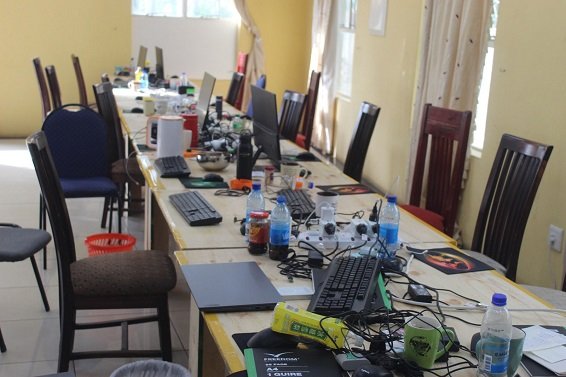
Dlamini states that investigators, with help from INTERPOL officers and forensic experts, analyzed information extracted from more than 400 electronic devices. He told the court that the forensic examination uncovered evidence suggesting the syndicate specialized in telecommunications fraud targeting Brazilian citizens and online fraud targeting victims in India.
According to Dlamini, investigators found conversations, documents, photographs, and other digital evidence allegedly linking the accused to victims in the two countries, and that investigations so far confirmed that about 40 Brazilian citizens were scammed by the syndicate.
The affidavit further states that INTERPOL has already identified the victims in Brazil, where investigations are also underway. Dlamini told the court that investigators have identified about 40 Brazilian citizens who were scammed, and that the matter is continuing to be investigated.
Police allege that members of the syndicate contacted unsuspecting Brazilians by telephone while pretending to be insurance agents. The victims were reportedly told that fraudulent transactions had been made using their identities, and their details were then allegedly passed to other members posing as Brazilian Federal Police officers.
Investigators say the victims were then intimidated into believing they were under criminal investigation. The court heard that the suspects allegedly forced victims to sign documents titled “Confidentiality Agreements,” falsely claiming the documents were issued by Brazilian authorities.
After the victims signed, they were allegedly instructed to transfer money into supposed secure accounts controlled by the Brazilian Central Bank while investigations were being conducted. The affidavit says victims were assured that their money would later be refunded after verification.
Police further allege that documents recovered from the electronic devices contained forged logos and official branding belonging to Brazil’s Council for Financial Activities Control (COAF) and the Central Bank of Brazil. Investigators say the documents were designed to create the impression that they had been issued by legitimate government authorities.
The affidavit also alleges that one victim was instructed to transfer R212 065.58 into an account provided by the fraudsters after being told the money would be refunded. After making the transfers, police claim victims were placed under strict surveillance by members of the syndicate.
They were allegedly required to send their geographical locations every three hours, upload selfies confirming their whereabouts, and remain in constant communication through dedicated WhatsApp groups administered by the accused. Investigators allege the victims believed they were communicating with genuine Brazilian police officers.
The State says the electronic evidence includes WhatsApp and Telegram conversations, copies of the alleged confidentiality agreements, and photographs sent by victims. Police also claim the syndicate set up a room at Castle Hotel to resemble a Brazilian police office.
During searches at the hotel, investigators allegedly recovered Brazilian police uniforms, police badges, communication radios, desk flags, bulletproof equipment, and other items they say were used during video calls with victims. Investigators believe the suspects wore the uniforms and used the room to convince victims they were dealing with legitimate law enforcement officers during online meetings.
The State further alleges that the enterprise generated substantial amounts of money, which were later converted into cryptocurrency and transferred through banks in Abu Dhabi and the United States before reaching Eswatini. According to investigators, forensic examinations also revealed another alleged operation involving online gambling platforms.
Police allege that members of the syndicate used Telegram to recruit users before deploying customer support agents with standardised scripted responses designed to manipulate customers. Investigators say the scripts were allegedly used to delay or deny withdrawal requests while convincing users to disclose sensitive personal and banking information.
The affidavit also alleges that the syndicate operated under a strict command structure. Police claim that each section had supervisors reporting to senior managers in Eswatini, who in turn allegedly reported to individuals outside the country. Investigators say workers were assigned specific responsibilities, with some responsible for betting platforms and others handling payments.
Police further allege that workers who breached internal rules received warnings before eventually being dismissed. The affidavit states that electronic records recovered from the devices include warning registers, dismissal records, and internal communications relating to staff discipline.
Investigators also allege that evidence recovered from the devices suggests the enterprise-maintained communication with certain influential people in Eswatini, but no names are disclosed in the affidavit, and no findings have been made by the court regarding those allegations. The State argues that the seized devices remain critical exhibits while investigations continue.
Dlamini told the court that forensic imaging is still underway and a comprehensive forensic report will be produced once the process is complete. Criminal proceedings against Tao Lyu, Li Peng, and several other accused persons remain pending before the Mbabane Magistrates Court.