- Why did Ethiopia shut down the market instead of pursuing targeted enforcement?
- What happens to the operators caught in the crackdown?
- What must the government and regulator do to convince investors that the market is stable, predictable and worth returning to?
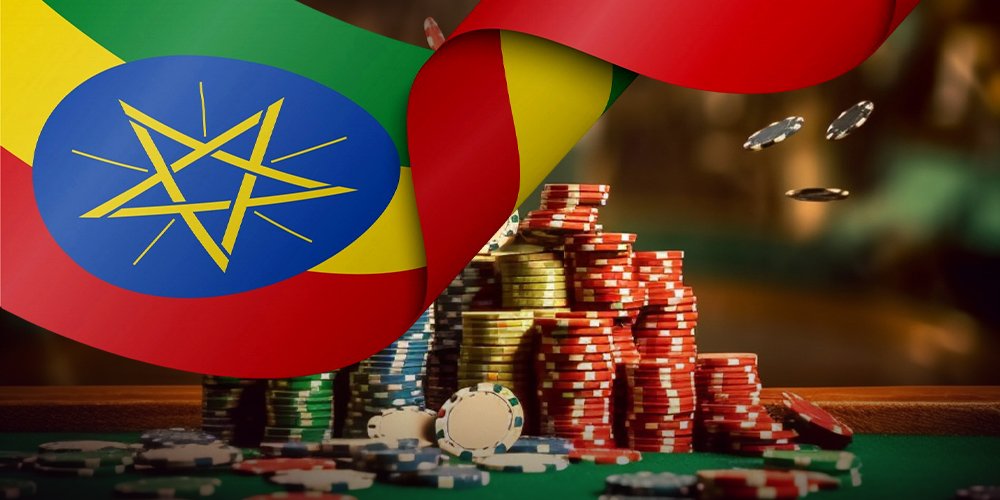
Ethiopia shut down its betting market. Operators were investigated, Licenses were revoked. Banks and payment providers were instructed to stop betting related transactions. Company owners, managers and associates were detained for investigation. Now, less than a year later, the country is preparing to reopen sports betting and digital lotteries under a new regulatory framework. That is not simply a regulatory reversal. It is a test of credibility.
The question Ethiopia must now confront is brutally simple: why should investors trust a market that government itself once considered serious enough to shut be down completely? The Ethiopian Lottery Service says the sector is being rebuilt around stronger regulation, accountability and modern digital technology following an independent audit.
A draft audit covering July 2023 to December 2025 reportedly found that operators processed ETB199 billion while only ETB3.6 billion of an expected ETB30 billion of an expected ETB30 billion in commissions had been paid, according to Capital Ethiopia. The figures remain part of the regulatory investigation and should not be treated as proof of wrongdoing by very operator.
However, the bigger story is not the size of the alleged financial discrepancy, it is how Ethiopia chose to respond.
Why shut down the market instead of pursuing targeted enforcement?
There is nothing controversial about a government investigation suspected tax evasion, illicit financial flows or breaches of licensing conditions.
- If an operator broke the law, investigate it.
- If it failed to pay legitimate taxes, establish the liability and recover the money.
- If criminal conduct is established, prosecute the responsible individuals.
That is what regulation is supposed to do.
However, Ethiopia moved from suspension of 22 sports betting companies on December 4, 2025 to the nationwide revocation of sport betting licenses on December 15. Banks and payment providers were also instructed to block betting related transactions.
That raises a legitimate regulatory question:
Was an industry- wide shutdown proportionate to the misconduct being investigated?
The authorities may have had reasons for taking extraordinary action. National financial integrity and government revenue are legitimate concerns. However, a modern regulator must also distinguish between industry risk and operator specific misconduct. A regulator’s job is not to merely punish, it is to identify risk, isolate bad actors, protect consumers and keep legitimate economic activity within the regulated perimeter.
There was another consequence.
The demand for betting did not disappear simply because the licensed market did. Reports indicate that illegal betting continued during shutdown, with Capital Ethiopia reporting a sharp increase in black market activity.
ELS itself warned in July 2026 that no sport betting operator held a valid license and cautioned consumers against depositing money with illegal services. That is the paradox of prohibition. Close the regulated market and you end up losing visibility over the market you were trying to protect.
What happens to the operators caught in the crackdown?
This is the question Ethiopia cannot leave unanswered if it wants serious investors back. The regulator’s current reopening strategy must explain what happens to companies that were suspended, revoked, investigated or otherwise caught in the crackdown. The legal status of the affected businesses cannot remain in regulatory limbo. There is an important distinction between an allegation, an investigation, an administrative breach and a criminal conviction.
That distinction matters for investors.
According to iGaming Business, 24 people arrested during the November 2025 crackdown were reportedly released by late January 2026, while their ultimate legal status remained unclear. The same report noted that a Federal High Court overturned the suspension of Hulu Sport over procedural issues, although an appeal and stay prevented the operator from simply returning to the market.
Those developments should force a fundamental question:
What is the government’s process for clearing operators that are not ultimately found liable?
Ethiopia needs a transparent classification system. Operators found compliant should have a route back. Operators with established tax liabilities should have a formal mechanism for assessment, settlement and payment. Operators accused of serious offences should face the appropriate legal process. Operators that deliberately operated outside the law should face appropriate sanctions. However, the government should not create a situation where an operator is effectively guilty forever because its license was once revoked.
Regulatory punishment cannot become regulatory uncertainty without an expiry date.
Investors will watch this closely.
What must Ethiopia do to make investors trust the market again?
The reopening must be more than the issuance of new license. It needs to be a regulatory reset. First, Ethiopia should publish the complete licensing framework before reopening: license duration, fees, taxes, technical requirements, ownership rules, AML obligations, advertising restrictions, responsible gambling requirements and sanctions.
Second, it should establish a clear enforcement ladder.
- Warning.
- Remediation.
- Fine.
- Suspension.
- License cancellation.
- Criminal referral where appropriate.
Not every compliance failure should become an existential event.
Third, operators need meaningful appeal rights. If a regulator can revoke a license, freeze an operator or restrict payments, there must be a transparent mechanism through which that decision can be challenged.
Fourth, Ethiopia must define its regulatory intelligence. The regulator should be able to see deposits, wagers, withdrawals, operator revenue and tax exposure rather than discovering major discrepancies only after investigation.
Fifth, Ethiopia must define its regulatory perimeter. The modern betting industry is not just bookmakers. It includes sportbook platforms, game suppliers, payment processors, aggregators, KYC providers, affiliates, technology companies and other B2B suppliers. If the technology behind the bet is invisible to the regulator, the regulatory system is incomplete.
Finally, Ethiopia must demonstrate that the market can remain open under pressure. That may be the most important investor confidence test of all. Brazil provides a useful warning. Even after establishing a regulated betting market, regulatory change continues to generate uncertainty.
The lesson is not that regulation is bad. The lesson is that regulation without predictability creates another form of risk.
Ethiopia’s second chance
Ethiopia now has an opportunity to turn the betting shutdown into something more than a meaningful U-turn. It can build a market where government revenue is protected, consumers are protected, illegal operators are pursued and legitimate businesses understand exactly what the rules are. Honestly, investors will not be persuaded by a reopening ceremony.
- They will examine the rules.
- They will examine the enforcement history.
- They will examine what happened to the operators caught in the previous crackdown.
- They will examine taxation.
- They will examine whether regulatory decisions can be challenged.
Above all, they will ask one question:
If Ethiopia can close the entire market once, what prevents it from doing it again?
The answer cannot be a press release. It has to be embedded in law, institutions, technology and due process. Ethiopia does not merely need to reopen betting. It needs to reopen investor confidence.