The Regulatory Shock
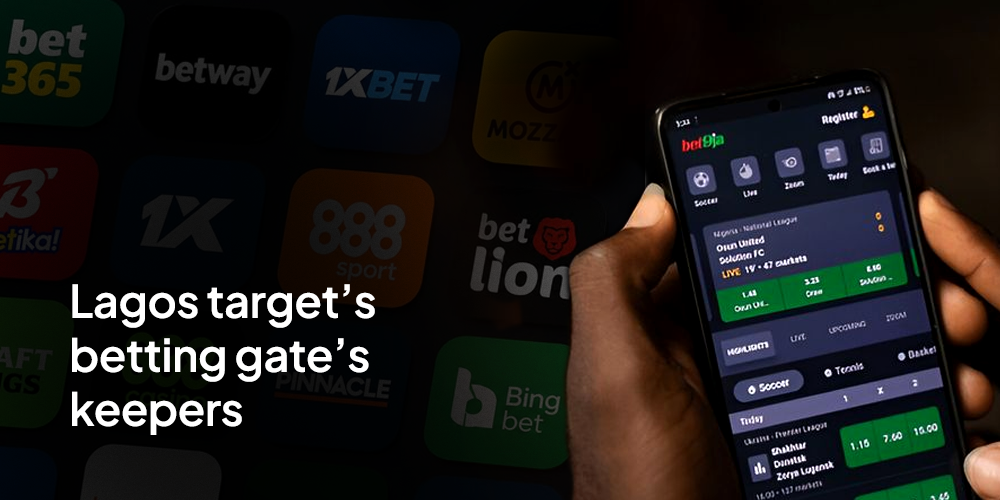
Lagos State is taking the fight against non-compliant gambling operators beyond betting companies and towards the business that help them reach consumers. In October 2026 notice to telecommunications operators and value-added service (VAS) providers places licensing verification, transaction reporting and service suspension at the center of a broader enforcement strategy.
The message is straightforward: companies facilitating gambling cannot assume that their own telecommunication or technology authorizations legitimize the gambling businesses they serve.
The Lagos State Lotteries and Gaming Authority (LSLGA) wants intermediaries to verify gaming authorizations, supply specified historical transaction and revenue-sharing records and stop facilitating services that lack the required approval. The notice sets a 30-day compliance deadline.
This is a significant shift in enforcement philosophy. Instead of the usual naming and shaming approach which has resulted in nothing, the regulator is targeting the infrastructure through which commercial activity flows. For government, the attraction is obvious.
Operators can change websites, corporate structures and commercial partners. Infrastructure providers, however, may offer identifiable points of intervention, access to relevant records and the ability to suspend particular services.
For investors, the implications are equally important. Regulatory exposure may no longer stop at the gaming license. It can extend into distribution agreements, transaction reporting, compliance systems and contractual relationships that support an operator’s business. However, a regulator’s ability to issue a directive does not, by itself, establish that the directive is proportionate or commercially effective. Lagos has identified a potentially powerful enforcement mechanism. Whether it has designed an effective one is the more important question.
Follow the Money: What Lagos Wants to Recover
The financial dimension of the notice deserves particular attention. Lagos is seeking specified transaction and revenue-sharing records covering the period from 22 November 2024 to the date of the notice. The stated objective includes assessing applicable gaming taxes, levies and other statutory liabilities. This is not merely an administrative exercise.
Better access to commercial records could help the regulator reconcile operator declarations which activity conducted through covered distribution channels. If material discrepancies exist, that information could support further investigation and lawful tax assessment.
However, there is a critical distinction between obtaining transaction data and proving tax evasion. Deposits are not the same as stakes. Stakes are not the same as gross gaming revenue (GGR). GGR is not net profit and revenue-sharing payments are not necessarily the taxable amount. The applicable tax base depends on the relevant legislation and the specific obligation being assessed. Without these distinctions, headline transaction figures can exaggerate the size of a potential tax liability.
The wider African market provides context for why regulators are paying closer attention to this issue. Gaming Compliance International estimates, as reported by Nigeria’s News Agency of Nigeria in July 2026, put African online gambling GGR at approximately $23 billion in 2025 of which $17.8 billion was attributed to unregulated activity. The report also estimated potential foregone tax revenue of $3.55 billion dollars across Africa.
These figures are substantial but they are continental estimates, not audited evidence of Lagos State tax losses. They cannot establish how much revenue Lagos is owed; how many operators are non-compliant or whether telecommunication intermediaries are responsible for any shortfall. The regulator should therefore publish its own evidence: estimated arrears, the number of affected operators, the applicable tax categories and the methodology used to calculate the liabilities.
For investors, the distinction matters. A large estimated illegal market may signal a compliance opportunity but it does not automatically represent recoverable government revenue or commercially available market share.
The Legal Foundation
The legal question is not whether Lagos should regulate gambling within its lawful jurisdiction. Far from it, it is whether every obligation imposed on the targeted intermediaries has a clear legal basis. The LSLGA relies on the Lagos State Lotteries and Gaming Authority Law 2021 and the Supreme Court’s 22 November 2024 judgement in Attorney-General of Lagos State Ors. V. Attorney-General of the Federation & ors., Suit No SC/1/2008.
The judgement is central to the dispute over federal and state authority in the regulation of lotteries and gaming. Its implications must be assessed precisely. A judgement addressing the constitutional distribution of gambling regulatory powers does not necessarily settle every question concerning telecommunications services, payment processing, historical data disclosure or potential liability of corporate officers.
Each obligation requires its own legal analysis.
Does the relevant legislation expressly authorize the regulator to require the records in question? What limits apply to disclosure? What procedure governs disputed licensing status? Under what circumstances can an intermediary be required to suspend a service? What legal elements must be established before a company or its directors can face liability? These are not technicalities designed to obstruct enforcement. They are the foundations of enforceable regulation.
The same scrutiny applies to data protection. Transaction records can contain commercially sensitive information and depending on their contents, personal data. The Nigeria Data Protection Act 2023 is relevant where personal data are processed. The regulator and affected businesses must establish the applicable legal basis, purpose limitation, security controls and retention requirements.
Investors should welcome clear rules. They should on the other hand be wary of rules whose boundaries are uncertain.
A predictable regulatory framework allows businesses to price compliance costs, structure contracts and assess risk. Ambiguity creates the opposite conditions: legal disputes, delayed investment, unexpected operating expenses and uncertainty over whether a commercial partnership can continue.
Where Is FSGRN in Lagos’s Regulatory Crackdown?
Lagos may have the legal authority to enforce its gaming laws but regulatory autonomy should not become regulatory isolation. The October 12 notice targeting telecommunication operators and Value Added Services (VAS) providers raises an important question: how much consultation took place with the Federation of State Gaming Regulators of Nigeria (FSGRN)?
The notice does not explicitly mention FSGRN, outline any consultation with the Federation or explain whether the proposed enforcement measures form part of a coordinated national strategy. This is significant because Lagos is a member of the Federation, whose purpose includes strengthening cooperation and promoting greater regulatory alignment among participating states.
Were other member states consulted about the implications for operators, technology providers and intermediaries serving multiple jurisdictions? Was a common compliance framework considered? An could the directive create conflicting obligations for businesses operating across boundaries? To be fair, Lagos and FSGRN have demonstrated cooperation in previous enforcement actions, including the September 2026 action concerning Stake.
Therefore, it would be inaccurate to conclude that the relationship does not exist. It does but the concern is that the October notice itself provides no visible evidence of coordination.
That distinction matters. A regulatory intervention affecting telecommunications and gaming intermediaries can have consequences beyond Lagos. Without transparent consultation, shared intelligence and clear implementation guidelines, individual state actions could create fragmented compliance expectations rather than a coherent regulatory environment.
Lagos is entitled to enforce its laws, however leadership in a federation also requires communication, coordination and accountability to the collective objectives of its members. If FSGRN is serious about harmonizing gaming regulation across its member states, the public should be able to see how that cooperation works in practice. Was the Federation informed, consulted or involved in shaping this directive?
The issue is not whether Lagos should enforce its laws. It is whether enforcement is strengthening collective regulation or deepening fragmentation.
The Verdict: Enforcement with Accountability
Lagos is right to examine the infrastructure through which gambling services reach its residents. A gaming business should not escape applicable licensing obligations simply because it uses a telecommunications network, VAS platform or other intermediary. Nor should statutory tax obligations disappear behind complex commercial arrangements. But the legitimacy of the objective does not settle the question of execution.
The state must demonstrate that its requirements are legally grounded, that the requested information is relevant to the obligations being assessed and that intermediaries have clear procedure for verification, disclosure and suspension. It must also distinguish verified tax liabilities from preliminary estimates and endure that enforcement decisions can be challenged through appropriate legal channels.
The wider industry should recognize the commercial reality: regulatory risk now extends beyond the operator’s license to reliability of its technology, distribution and compliance partners. Businesses that cannot demonstrate where they are authorized to operate, how transactions are recorded and how their statutory obligations are met may face greater operational uncertainty.
For investors, however, aggressive enforcement is not automatically a sign of healthier market. The investment case depends on whether regulation becomes more predictable, compliance more transparent and consumer confidence stronger. Lagos should be judged not by how many warnings it issues or platforms it suspends but whether it recovers legitimately owed revenue, reduces unlawful activity, protects consumers and create a fair environment for compliant businesses.
The bottom line: targeting betting’s gatekeepers is a smart regulatory strategy only if the rules are clear, the evidence is credible and the outcomes are measurable. Otherwise, Lagos risk creating a more expensive compliance system without proving that it has built a better-regulated market.