Artificial Intelligence is rapidly transforming iGaming, but for operators, the real challenge is moving beyond experimentation to measurable business value. The question is no longer simply how much AI an operator can deploy, but how much return that investment can actually generate.
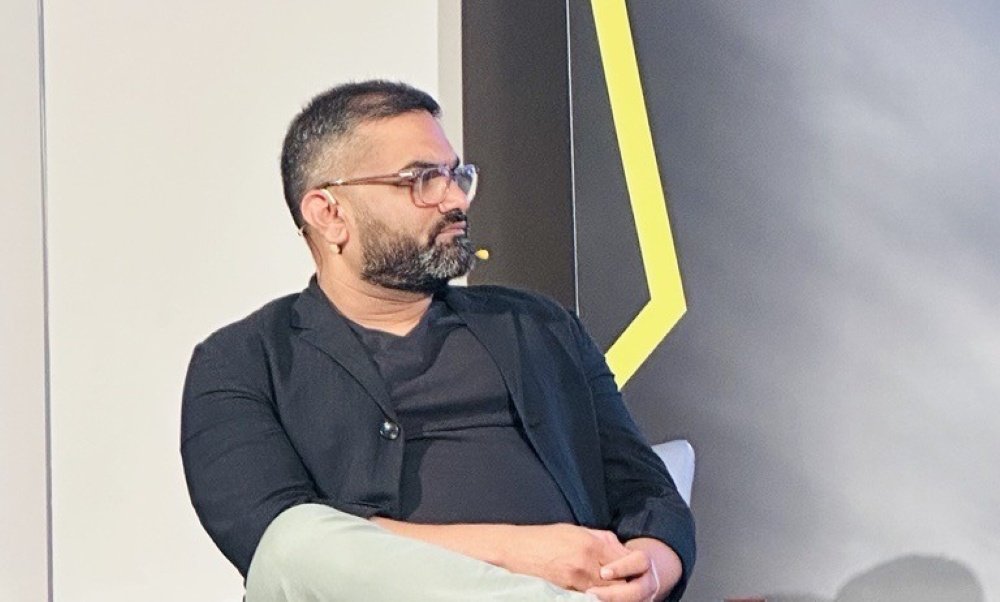
In this exclusive FindMore Africa interview, Imran Bukhari, Co-Founder and CEO of Bluestuff.ai, explores why “The Biggest Technology Challenge Facing iGaming Operators is AI Return.”
Imran brings a strong technology and iGaming background to the conversation. He graduated from Gujarat University with Distinction in Computer Applications, completing his studies through Master’s degree level. His professional journey includes experience with bet365, followed by Truewave, a software development and technology solutions company. He later founded NE Group before moving into his current role at Bluestuff.ai, an agentic operating system for iGaming.
In this interview, Imran examines AI adoption, investment, implementation and the critical question of turning AI innovation into measurable returns for operators.
What is the biggest technology challenge facing iGaming operators today?
It’s not AI adoption — it’s AI return. NEXT.io’s State of AI in iGaming report this summer found four in five iGaming companies now use AI somewhere. UNLV’s International Gaming Institute and KPMG found only one in five can point to meaningful ROI. That gap is the industry’s real technology problem.
And it’s not the models. Most platforms were architected years before anyone imagined data would need to feed intelligent systems. Logs unstructured, interfaces closed, institutional knowledge sitting in people’s heads. The systems are illegible — and no intelligence, human or artificial, can operate on an estate it can’t see. The standard answer is replatforming, which is a 12-to-18-month migration most operators can’t afford and most boards won’t sign off.
So the challenge is making the estate you already run legible to intelligence, without ripping it out. That’s the entire premise behind Bluestuff’s AI-layer mode: foundations first, then agents.
How are lightweight front-end solutions changing player acquisition and retention?
The frontend is the only part of the stack a player ever touches, so it’s where acquisition and retention are actually won or lost. In mobile-first markets, heavy frontends fail quietly: page weight is data cost, and on a low-end Android over a patchy network, every extra megabyte is a reason to leave.
Lightweight embeds change the acquisition model itself. A full sportsbook can now be dropped into a site that already has an audience — a media brand, a crypto community, a content platform — instead of building a destination from zero and paying to fill it. You go where players already are. We run exactly that as Sportsbook as Product; one of those deployments has been live inside a client’s existing site for over five months.
On retention, light frontends iterate fast — ship, measure, adjust weekly rather than quarterly. And the direction of travel is the frontend collapsing into conversation altogether: deposits, analysis, and bets in a single thread.
What Key Lessons did you Learn at Bet365 that still Influence your Business Strategy?
I spent seven years inside bet365, and the biggest lesson was ownership. bet365 builds its technology in-house, and that control of the stack is why it moves faster than everyone else — speed compounds. We’ve carried that into Bluestuff deliberately: operators own what our agents build. Your originals are yours. Your conversational channel is yours. Renting the things your business runs on is how you end up slow.
The second lesson is that humans matter at exactly the right points. Big books win on judgment the trader who looks at the over-limit bet, the sharp signal, the price that doesn’t smell right. Automation everywhere, judgment where it counts. That’s why humans hold the release gate on everything our agent workforce ships: nothing goes live without your approval.
The third is cultural: relentless product velocity. Player experience beats marketing spend every year, in every market.
What Separates Successful Sportsbook Platforms from the Rest?
Three things, in order. First, trading and risk quality — it’s where margin is actually made or lost, and no frontend polish covers for weak pricing. Second, speed of iteration: the books that win treat the sportsbook as a product they improve weekly, not a commodity feed they switched on once. Third, localisation depth — payments, languages, the bet types a market actually wants. A platform tuned for Europe doesn’t just underperform in Lagos or São Paulo, it fails.
There’s a fourth emerging: how well the platform combines automation with human judgment. The direction is clear — more of the trading decision is moving to machines — but the successful books keep humans on the exceptions, inside a defined risk appetite. Platforms that automate everything blindly, or automate nothing, both lose. The architecture that separates winners now is the one that knows which decisions belong to whom.
How will AI Reshape the iGaming Industry over the Next Five Years?
It moves from point solutions to workforces. Today AI in iGaming mostly means a chatbot here, a BI copilot there. Within five years, specialised agents will cover whole functions — building frontends, producing games, running trading inside a defined risk appetite, resolving player support — working together, with humans directing and approving.
And the honest answer is that this isn’t a five-year prediction — parts of it are running now. Trading is crossing: Kambi reported 48% of its trading ran autonomously in 2025, over 60% by early 2026, and it traded this summer’s World Cup fully by AI — 104 matches, over a hundred million bets. Player support has already crossed.
At a live Tier 1 deployment, our CS Agent++ replaced the operator’s existing chat widget and now resolves 80% of queries fully end to end — deposit and withdrawal status, forgotten PINs, and bet-settlement disputes leading the categories — resolved, not deflected, with no human touch, in the player’s own language, at 3am the same as 3pm. Operationally that means fewer human agents per shift and peak loads handled without breaking.
When a payment provider wobbles, the incident information is ingested once and every player gets the same accurate answer at the same moment — not a thousand slightly different ones while the team firefights. And the channel changed shape entirely: support became the place players play, analyse, and bet.
That resets expectations permanently — once a player has had a withdrawal question resolved in seconds at midnight, a ticket queue feels broken. More Tier 1 operators are deploying it now. All of it runs inside the operator’s responsible gambling framework, and it never encourages play.
The deepest change over the five years, though, is content. AI has already collapsed game production from months to days through Bluestuff Mint. The next step is that game creation stops being a studio activity at all. iGaming is about to have its user-generated-content moment: streamers, communities, and operators’ own audiences making the games, the way creators remade media over the last decade.
That only works on free-to-play systems deeply integrated with the real stack the same provably fair engines that run real-money originals, tournaments and engagement built in, player data flowing back to whoever owns the audience not toy widgets bolted on the side. We’re extending Bluestuff Mint in exactly that direction: a creator minting their own themed game and running it for their audience. Whoever owns that creator layer owns the top of the industry’s funnel.
One constant through all of it: this is a regulated industry, so the winners will be the operators who can show a human release gate and an audit trail while moving at machine speed. Automation without governance doesn’t survive contact with a regulator.
Why did you Launch Bluestuff.io and What Problem does it solve?
Because we ran the experiment on ourselves first. NE Group has operated in African markets for six-plus years, and we lived the two problems every operator knows: launching takes an army and months, and adding intelligence to a platform you already run is nearly impossible because the systems underneath are illegible.
So over 18 months we rebuilt our own operation every log structured, every system opened, a central intelligence connecting business KPIs down to the code line and then switched on agents that could actually see what they were operating on. The results made the case: 76% of our people repurposed into new products and ventures, and at 24% of the original size, we ship more than we ever did.
Bluestuff is that, productised: the agentic operating system for iGaming. Run it as your full stack, or as the AI layer on top of the platform you already have. The problem it solves is the gap the whole industry is stuck in — everyone’s adopted AI; almost nobody’s getting a return from it.
What opportunity in Africa’s iGaming Market is most Underestimated by Investors?
Two, and they’re connected. The first is crypto payment rails. Investors model Africa as an acquisition story population, smartphone growth and miss that Nigeria ranks second in the world for grassroots crypto adoption on the Chainalysis index. Stablecoins are solving real money-movement problems there every day, and gaming platforms that can handle crypto compliantly ride rails that are already built and already trusted.
The second is that the fragmentation investors price as risk is actually the moat. Africa isn’t one market it’s dozens of regulatory and payment environments, each with its own gaming board, its own PSPs, its own reconciliation quirks. Those relationships and integrations take years and can’t be shortcut with capital. Whoever holds them holds distribution.
We’ve spent six-plus years building ours approvals with seven gaming boards across Africa and payment networks across 12 countries and it’s that footprint, not the TAM slide, that compounds.
In Africa, What are the Basic Fundamentals a Platform must Possess to be Successful?
Five, and none of them are glamorous. First, payments depth: mobile money, local PSPs, and reconciliation that survives a provider wobbling at 11pm on a Saturday. If the deposit fails, nothing else you built matters. Second, a genuinely lightweight mobile frontend low-end Android, expensive data, patchy networks. Every megabyte costs your player real money.
Third, per-market compliance: each gaming board is a relationship, not paperwork, and a licence in one market tells you nothing about the next. Fourth, economics built for small stakes at huge volume the platform has to be architected and priced for high-frequency, low-value transactions, because that’s the actual shape of the business.
Fifth, retention infrastructure: support in the player’s language at every hour, and bonusing that works on thin margins.
Marketing gets you a first deposit. These five decide whether there’s a second. Years of running our own operation in African markets taught us that the fundamentals are unglamorous — which is exactly why they’re defensible.