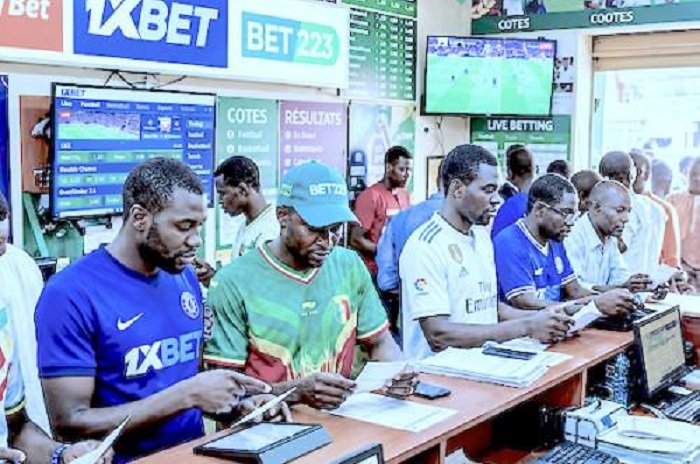
Cameroon has a tax framework for sports betting, but publicly available information does not establish how much the activity contributes to government revenue. A study published in October 2026 by AfriBallon found no consolidated industry turnover figures or verifiable official data on tax revenue collected from operators. The number of companies holding valid operating permits also remains difficult to establish.
In its Sports Betting Barometer in French-speaking Africa, AfriBallon examined the regulatory frameworks and economic data available in Cameroon, Côte d’Ivoire and Senegal. The report is based on documentary research using sources consulted on October 9, 2026, rather than fieldwork.
AfriBallon is a football and sports betting information website that also compares bookmakers offers. It is published by LLAO LLAO LTD, a Mauritius-based company that says it receives affiliate commissions from certain operators.
In Cameroon, companies operating games of entertainment, gambling and chance under concession or authorization arrangements are subject to an annual fee equivalent to 2% of turnover before tax. Following the country’s tax reform in December 2024, responsibility for collecting the fee was transferred to the General Directorate of Taxes (DGI).
The 2026 Finance Act further clarified the arrangement, assigning exclusive responsibility for collecting the fee to the state tax authorities. Article C 132 of the General Tax Code requires operators to declare and pay the fee quarterly, within 15 days of the end of each quarter, based on the turnover recorded during the period.
Part of the revenue generated by the fee is allocated to regional authorities through the Special Fund for Equipment and Inter-Municipal Intervention (FEICOM).
Cameroon’s gaming sector is also subject to fees for obtaining and renewing operating authorizations. Under the 2025 Finance Act, the fee for online gaming was set at CFA francs 300 million. For betting operations under Type A and Type B concessions, the respective fees are CFA francs 10 million and CFA francs 5 million.
Financial transactions linked to gambling are subject to additional taxes. Since 2025, money transfers and withdrawals made through electronic gaming and entertainment platforms have attracted a 1% tax, compared with the standard rate of 0.2% for transactions covered by ordinary tax rules. An additional duty of CFA francs 4 per transaction also applies. However, these transaction taxes extend beyond gambling and are not exclusive to the betting sector.
Although these measures establish several potential sources of government revenue, the documents reviewed by AfriBallon do not show how much has actually been collected from sports betting operators or how many companies have paid the relevant authorization fees.
The annual fee of 2% also applies to several categories of games, making it difficult to isolate the contribution from sports betting without a detailed breakdown. Even if total collections were published, additional data would be needed to determine how much came specifically from sports betting.
AfriBallon’s findings do not establish that the tax authorities lack this information internally. Rather, the absence of consolidated public figures makes it difficult to assess the sector’s economic size and its actual contribution to government finances using publicly available sources alone.
The report also highlights gaps in the public disclosure of authorized operators. In Côte d’Ivoire, the Gaming Regulatory Authority (ARJH) listed 17 approved private operators on a register consulted by AfriBallon on October 9, 2026. In Senegal, the Senegalese National Lottery (LONASE) published a list of 17 authorized online gaming platforms on June 30, 2026. The figures are not directly comparable, however, because Côte d’Ivoire’s list covers private operators, while Senegal’s covers online gaming platforms.
In Cameroon, operating permits are issued by the Ministry of Territorial Administration (MINAT). However, AfriBallon said it could not find an equivalent public register on the ministry’s website. Figures reported in the media on the number of active bookmakers do not establish how many hold valid authorizations.
Some operators have publicly disclosed details of their licenses. In its general terms and conditions updated on October 14, 2026, Betclic Cameroon states that it received ministerial authorization No. 000059/A/MINAT/SG/DAP/SDLP/SJ on April 28, 2026, to offer online gaming in Cameroon.
However, the company’s disclosure does not independently verify the authorization or provide a complete picture of the operators licensed in the country.
Determining the tax revenue generated by sports betting in Cameroon would therefore require two key sets of information: a complete register of valid operating authorizations held by MINAT and a breakdown of taxes and fees actually collected by the relevant tax and financial authorities. Until these figures are publicly available, the sector’s precise contribution to government revenue remains difficult to establish.