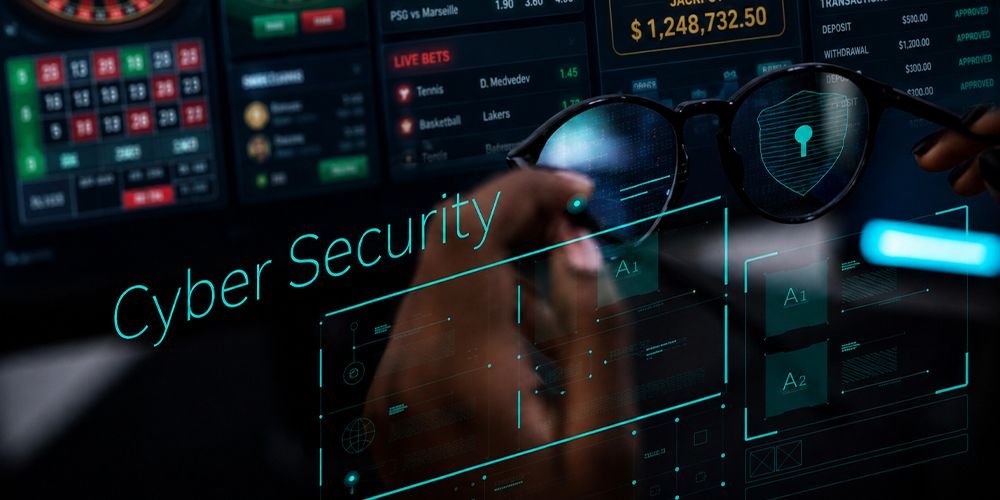
The modern battlefield no longer begins with tanks, missiles or soldiers; it’s Cybersecurity. It begins with a click. In today’s digital economy, cybersecurity has become one of the most critical business priorities on the planet.
Every industry-banking, gaming, fintech, healthcare, telecommunications, government and e-commerce-is under constant attack from cybercriminals seeking money, data, disruption or strategic advantage. The uncomfortable truth is that every connected business is already on the battlefield. The only question is whether it knows it.
For years, many companies treated cybersecurity as an IT department issue. Something for technical teams to handle quietly in the background while executives focused on growth, sales and profitability. That mindset is now dangerously outdated. Cybersecurity is no longer a technology issue. It is a business survival issue.
A single cyberattack can destroy customer trust, trigger regulatory investigations, expose confidential information, disrupt operations and wipe millions from company valuations. In some cases, businesses never recover. The attackers are evolving faster than many organizations.
Cybercriminals today operate like multinational corporations. They have organizational structures, specialized teams, customer service departments, recruitment networks and sophisticated attack infrastructure.
Ransomware groups, fraud syndicates, identity thieves and state-sponsored actors are no longer isolated hackers operating from basement. They are business attacking business. This reality is particularly relevant across Africa’s rapidly expanding digital economy.
As digital payment grow, mobile money expands, online betting scales and fintech innovation accelerates. Africa’s cyber risk exposure is increasing simultaneously. Every new payment channel, mobile application, cloud platform, customer database and digital transaction creates another potential attack surface. Growth attracts attention and cybercriminals follow growth.
The gaming and betting industry provides a perfect example.
Online operators process vast amounts of customer information, payment data, transaction histories, identity documents and behavioral analytics. This makes them targets for fraudsters, account takeovers, bonus abuse networks, payment manipulators and organized cybercriminal groups.
Many operators invest heavily in marketing, acquisition and customer retention while underinvesting in cybersecurity infrastructure. That imbalance creates vulnerability.
The most dangerous cyber threats today are often not technological. They are human.
Phishing emails, social engineering attacks, credential theft, insider threats and employee mistakes remain among the leading causes of security breaches globally. Attackers understand a simple principle: it is often easier to trick a human than to defeat a firewall. This is why cybersecurity culture matters as much as cybersecurity technology. Employees must become the first line of defense.
Organizations must also adopt a zero-trust mentality. Trust nothing automatically. Verify everything. Every user, device, transaction and system interaction should be continuously authenticated and monitored. The companies winning the cybersecurity war are not necessarily spending the most money. They are building resilience.
That means multi-factor authentication, real-time threat monitoring, data encryption, penetration testing, employee training, cloud security frameworks, incident response planning and regular security audits. Cybersecurity can no longer be treated as an annual compliance exercise. It must become an operational discipline.
The future will only intensify this challenge. Artificial intelligence is making businesses more efficient but it is also giving cybercriminals new tools. Deepfakes, automated phishing campaigns, AI-generated malware and intelligent fraud systems are transforming the threat landscape at unprecedented speed.
The digital battlefield is expanding every day and unlike traditional wars, there are no front lines. Every company is exposed. Every customer database is a target. Every transaction is a potential attack point.
In the new economy, cybersecurity is not simply about protecting systems. It is about protecting trust and in a digital world, trust has become the most valuable asset any business possesses.