Mozambique, a southern African nation, is experiencing a remarkable growth in the post‑COVID‑19 era, with online gambling surge emerging as one of its fastest-growing digital sectors. The pandemic initially disrupted physical casinos and betting shops, but it also accelerated a shift toward online betting platforms, fundamentally transforming how Mozambicans engage with gaming and entertainment.
According to H2 Gambling Capital, the online betting market in Mozambique has grown at an average annual rate of 18% since 2021, contributing substantially to national GDP growth. This trend reflects a broader shift seen across Africa, where countries like Kenya, South Africa, and Nigeria are also witnessing rapid growth in mobile-based gaming and sports betting. For Mozambique, the digital gaming surge represents both economic opportunity and a shift in consumer behavior. During the lockdowns, limited social interactions and the need for digital engagement drove many users to mobile betting and online casinos.
In 2022–2023, the surge in mobile connectivity spurred over 7 million web-enabled users, combined with a telecoms industry generating over 20 billion MZN ($313 million), this translates to the huge adoption of internet connectivity fueled by the embrace of Mozambique’s online betting platforms such as 888Africa and Elephant Bet. According to DataReportal – Global Digital Insights, as of early 2024, Mozambique had roughly 7.96 million internet users, representing 23.2% of the population.
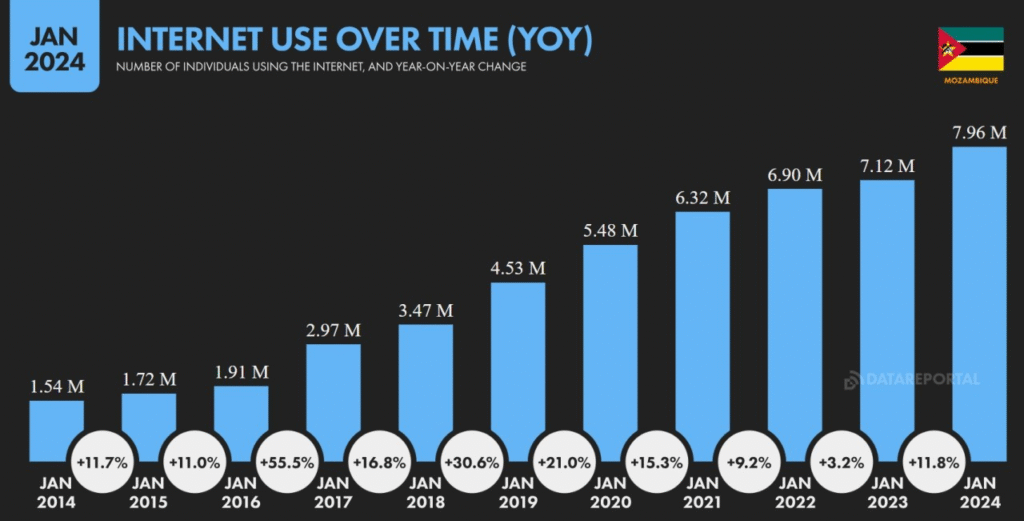
With the country’s population sitting around 35.6 million in 2025, that means millions of Mozambicans are just a click away from accessing betting applications. This rapid market growth is primarily driven by the nation’s passion for sports, making sports-betting the most prominent offering. Platforms are optimizing for low data consumption and user-friendly interfaces to address the high cost of data and the low smartphone penetration rate, which pose significant challenges.
In Mozambique, where the average monthly income hovers around €26 (2,000 MZN), even the smallest digital gambling stakes can carry substantial financial risks or rewards. This dynamic is a crucial factor behind the rapid expansion of the online betting market. Mobile connections reached 18.91 million, marking a 7.3% increase from the previous year. This rapid uptake of mobile technology, sometimes referred to as the “abduction of smartphone” connectivity, has made gambling platforms far more accessible to everyday users.
This surge in connectivity aligns with broader trends across the region. Analysts from the African Digital Economy Forum report that this shift has permanently changed consumer behavior, particularly among young adults aged 18–35 are reshaping the market, with this demographic now accounting for over 70% of active players. The young population increasingly seeks to monetize digital engagement outside the formal economy, reflecting a growing trend of using digital platforms for leisure and economic activities.
The expansion of online gambling has also prompt investments in related industries, significantly contributing to national GDP and tax revenue. This rising trend offers strong investment potential in financial technology (fintech), telecommunications, and digital startups as demand grows for efficient payment systems and advanced gaming platforms. The online gambling surge is closely tied to the popularity of mobile money services, like M-Pesa owned by Vodacom Moçambique, which facilitate the high volume of micro-transactions and drive innovation in secure payment gateways and digital wallet services.
However, market entrants must navigate the challenge of financial exclusion, as mobile money adoption in Mozambique tends to favor those already somewhat integrated into the financial system, leaving vulnerable populations at a disadvantage. Beyond boosting government revenue, the sector also promotes digital entrepreneurship, job creation, and the development of new economic ecosystems, positioning online gambling in Mozambique as the next enormous market in Africa.
Interestingly, the surge in technological adoption and smartphone penetration in Mozambique digital betting landscape is entering a new chapter, strengthened by the regulator that is actively combating illegal platforms, tightening compliance measures, and enforcing responsible gaming at every level. These decisive interventions are not just restoring order; they are unlocking space for genuine innovation to thrive. With a safer, well-regulated landscape, licensed operators are driving fintech advancement, boosting digital services, and contributing meaningfully to the country’s economic transformation. What emerges is a future where gaming fuels progress, empowers communities, and anchors Mozambique’s rise as a regional digital powerhouse.