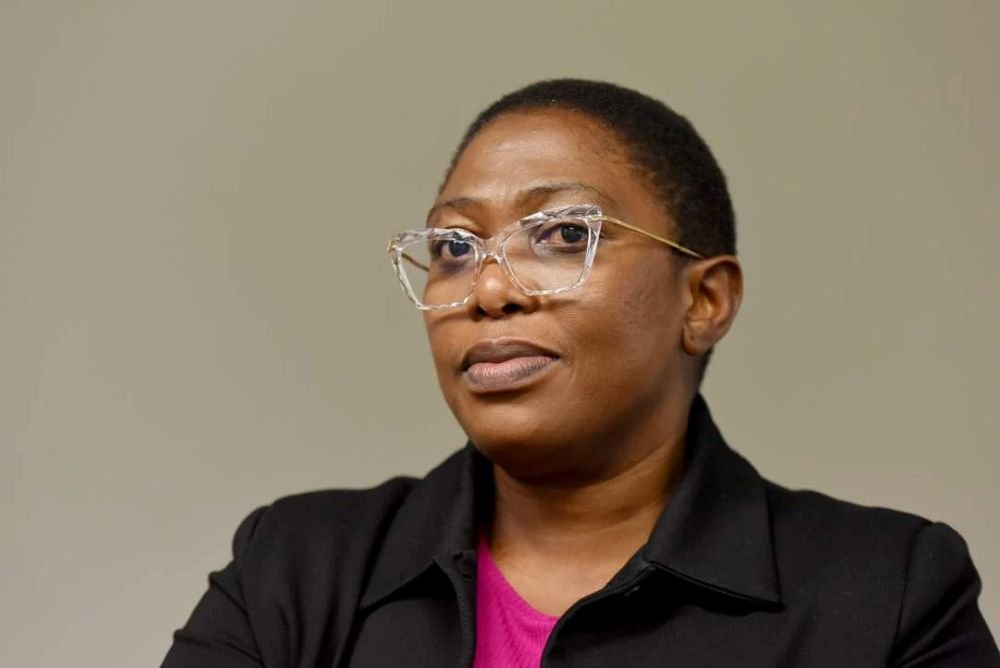
For Sibongile Simelane-Quntana, the fight against gambling harm is deeply personal. At 51, she leads the South African Responsible Gambling Foundation (SARGF), where she focuses on responsible gambling, treatment and harm reduction, while advocating for a stronger public health response to addiction.
Her approach to this work traces back to her childhood. Simelane-Quntana grew up in Vukuzakhe township in Volksrust, near the KwaZulu-Natal and Mpumalanga provincial border, as the youngest of three children, and the values her parents instilled in her continue to shape how she leads and lives today. Humility stood out as one of the strongest, since her parents taught her that circumstances can change quickly and that people deserve dignity regardless of their position in life.
“That value has enabled me, in my leadership journey, to create opportunities for young people who are unemployed, who have been sitting at home, and who may be struggling with ‘becoming something’,” she said.
As a result, she has brought people into the organisation with or without experience, mentoring them and giving them a chance to learn. “I understand that in life, you can be a good person or have it all and then lose it all tomorrow… And you can lose it all if you do not have humility, or if you are a proud person,” she said.
Her father reinforced this same lesson in a different way, teaching her that tears alone would not change her circumstances. She had to take responsibility, work hard and find a way forward. “It helped me understand that I could not simply cry and have faith; I had to take responsibility. You do not have anyone to blame but yourself for the life you build,” she said.
At the same time, she has learned that resilience does not mean fighting every battle indefinitely. “No matter how many fights you put up in life, you have to know when to lay your sword down,” she said. “This has taught me surrender – knowing when I have done the best that I can do.”
From family experience to gambling harm prevention
Her decision to work in addiction and gambling harm prevention grew out of this same family experience. Simelane-Quntana said her father relied on alcohol and her brother struggled with drugs, and as a child, she did not understand addiction or know how to help. “My own personal experience inspired me,” she said. “I want to advocate for families who do not understand what is happening to their loved ones.”
That early experience later shaped how she built SARGF. Five years ago, she recognised that the foundation needed to do more to support families affected by gambling harm, since it did not yet have a social work department. “I realised the importance of families, how they too are affected, and how social work can help both individuals and families understand how addiction breaks down family structures,” she said. Today, thanks to that realisation, the organisation has a fully fledged social services department.
Fighting gambling harm in South Africa
That same drive has shaped much of her broader career. Among Simelane-Quntana’s achievements are the conceptualisation and roll-out of National Responsible Gambling Month in November, the development of SARGF’s strategic plan, and the creation of its social work wing. She has also pushed for the foundation’s treatment and counselling protocol to incorporate data science, public health and epidemiology.
Alongside this work, she has continued building her own expertise, holding an MBA completed during the Covid-19 pandemic and now pursuing a PhD at the University of the Witwatersrand’s School of Business Administration. She also holds postgraduate qualifications in public management and administration and arts, as well as a Bachelor’s degree in Education.
Even with this experience, the gambling landscape keeps changing, particularly with the growth of online betting. “What concerns me the most is that online betting has made gambling more immediate, more accessible, and easier to engage with at any time of day, while much of the associated harm remains hidden,” she said.
This shift shows up clearly in the data. The National Responsible Gambling Programme’s counselling line has found that people do not always reach out because they recognise they have a gambling problem; some start with questions about online betting accounts or betting activity, which creates an opening to identify those who may be vulnerable.
Against this backdrop, Simelane-Quntana said one of the biggest misconceptions is that gambling cannot become addictive. “Gambling disorder is a recognised behavioural addiction that activates the brain’s reward system in much the same way as alcohol or other substances,” she said. She believes those who seek counselling or treatment represent only a fraction of people experiencing gambling-related harm. “From our perspective, this is the tip of the iceberg and suggests that South Africa may be underestimating the scale of the challenge.”
Because of this, she wants policy to respond more quickly when people ask for help, particularly through self-exclusion. “An individual reaching the point of requesting exclusion requires immediate, 24/7 digital intervention,” she said. In her view, self-exclusion should link directly to counselling, treatment and rehabilitation, rather than operate as a stand-alone administrative process.
The woman behind the leader
Beyond her professional achievements, Simelane-Quntana faces a challenge many working women know well: balancing the demands of being a woman, mother, wife and professional. “The most challenging thing is balancing being a woman, a mother, a wife, and a professional. Balancing all of this sometimes takes a toll on you,” she said.
Fortunately, her family and colleagues help carry that load. Her staff, in particular, often remind her to step back from work. “I have incredible support from my staff members, who always remind me to close the laptop,” she said. Through it all, her family remains her biggest motivation: “My children, my husband, and the work that we do in the foundation motivate me every day.”
For Simelane-Quntana, this sense of ongoing responsibility extends beyond her own household to Women’s Month itself, which she sees as a reminder that the work facing women is far from finished. “Women’s Month, to me, means that my work as a woman is not done. It means my work will never be done,” she said.
She also questions the expectation that women must constantly demonstrate strength. “The expectation of being ‘imbokodo’ — someone who fights until the end and never backs down — is unreasonable at times,” she said. “As women, we live in a society where we are put through heat to the point of breaking.” Beyond that, she believes women are too often pitted against one another, instead of recognising the role they play in each other’s lives.
Ultimately, for Simelane-Quntana, leadership means creating opportunities, listening and using her own experience to improve support for people and families affected by social challenges. From Vukuzakhe township in Volksrust to leading a national organisation, the lessons from her parents remain central to who she is: humility, personal responsibility, and the understanding that resilience also means knowing when to step back.
Credit: themercury.co.za