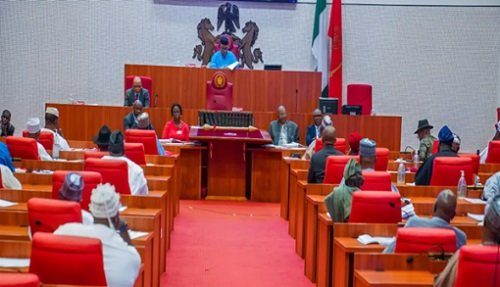
The Senate passed the Virtual Asset Service Providers Crypto Regulation Bill, 2026 for second reading, marking a significant move toward creating a legal framework for cryptocurrency and other digital asset activities in Nigeria. Lawmakers said the bill is intended to protect investors, reduce fraud and criminal activities, and unlock the economic potential of Nigeria’s fast-growing digital asset sector.
Sponsored by Deputy Senate President Senator Jibrin Barau, the bill seeks to establish a regulatory and supervisory framework for virtual assets, digital assets, and Virtual Asset Service Providers (VASPs). It would also make licensing, transparency, and compliance mandatory for cryptocurrency exchanges operating in the country.
Presenting the bill on behalf of Barau, Senator Tahir Monguno said Nigeria has lagged behind several African countries in regulating its digital finance ecosystem, despite having one of the highest rates of cryptocurrency adoption on the continent. He noted that the lack of a clear legal framework has left investors exposed to risks and has enabled illicit activities to flourish.
Supporters of the measure described virtual assets as an unavoidable feature of the modern global economy, warning that continued regulatory gaps could push investments and business activity into unregulated channels. They argued that proper regulation would protect millions of Nigerians, especially young entrepreneurs and traders who rely on cryptocurrency and related technologies for employment and income.
Barau said Nigeria’s strong position in virtual asset adoption also comes with regulatory challenges. He warned that allowing the sector to operate without oversight could encourage black-market transactions, facilitate criminal conduct, and reduce the sector’s ability to contribute to the Federal Government’s goal of building a $1 trillion economy. He added that the bill is meant to provide clarity and confidence for operators and investors rather than stifle innovation.
Barau said the proposed law aims to bring order, accountability, consumer protection, and transparency to the ecosystem. He also said it is expected to align Nigeria’s regulatory approach with international standards set by the Financial Action Task Force (FATF) and the International Monetary Fund (IMF).
During the debate, Senator Natasha Akpoti-Uduaghan highlighted the effects of weak regulation on Nigeria’s technology industry, saying many young innovators are being forced to take their businesses abroad. She cited her son, who runs a gaming platform with a large global user base, and said the lack of a strong regulatory environment has discouraged international technology service providers from operating in Nigeria. She warned that Nigeria could lose billions of dollars in potential investments and jobs if it fails to create a framework for emerging digital industries.
Senator Adams Oshiomhole also backed the bill, saying the need for regulation was obvious and urging lawmakers to move quickly. However, Senator Adetokunbo Abiru advised that the bill should be harmonized with existing financial laws, including the Investments and Securities Act and the Banks and Other Financial Institutions Act (BOFIA), to ensure consistency in regulating the wider digital finance sector.
In concluding the debate, Barau said the legislation would protect investors and other participants while ensuring innovation supports national development. He added that a clear legal framework would help prevent exploitation and build confidence among investors and operators.
After deliberations, the Senate referred the bill to its Committee on Capital Market for further scrutiny, with a directive for the committee to submit its report within four weeks. If passed into law, the bill is expected to place Nigeria among African countries such as Kenya, South Africa, and Ghana, which have adopted formal regulatory systems for cryptocurrency and digital asset transactions, while empowering regulators to issue licenses and tackle fraud, money laundering, and terrorism financing.