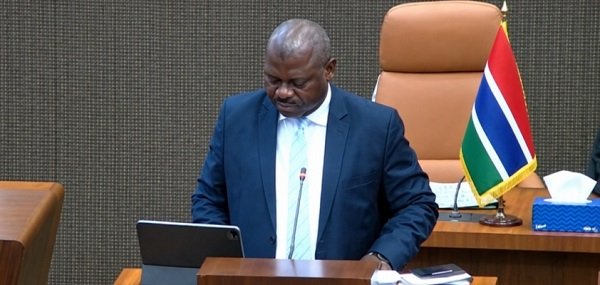
The Gambia tax revenue has more than doubled in three years without introducing broad-based tax increases, Finance and Economic Affairs Minister Seedy Keita said, attributing the rise to digital reforms, stronger tax administration, and efforts to reduce leakages in the revenue collection system.
Speaking in an interview on Coffee Time with Peter Gomez, Keita said tax revenue increased from D11 billion in 2022 to D25 billion in 2025, representing an increase of more than 124%. He explained that total tax collected in 2022 for the full year was D11 billion, while by 2025he total had reached D25 billion.
The minister said the improvement was achieved without adding new taxes for the general public. Instead, government focused on ensuring that existing taxes are collected properly.
“This was achieved not on the back of any tax increases,” he said. He added that the only tax rates increased were sin taxes, including those on gambling, alcohol, and cigarettes. According to Keita, the government’s approach is to ensure the state collects revenue that is due “by law and according to law,” rather than overtaxing citizens.
Keita also linked the gains to reforms introduced after he took office in 2022, including establishing a Directorate of Revenue and Taxes, approving the country’s first Domestic Resource Mobilization Strategy, and rolling out digital systems to improve tax collection.
He cited measures such as the adoption of ASYCUDA World for customs processing, digital excise stamps, fuel marking technology, the digitalization of rental tax, electronic VAT invoicing, telecom revenue assurance, and plans for the Integrated Tax Administration System (ITAS), which will allow taxpayers to file returns electronically.
He said the reforms have delivered strong results, noting that in several cases revenue rose by more than 100%, demonstrating where leakage had existed. Keita added that The Gambia’s domestic resource mobilization efforts have also gained international recognition, with the International Monetary Fund (IMF) and the World Bank praising the reforms during the recent approval of the fifth review of the Enhanced Credit Facility and the Resilience and Sustainability Facility.
Finally, Keita said the increased revenue has enabled government to expand spending on public services, including salary adjustments for civil servants. He emphasized that the purpose of the reforms is to improve efficiency, not to impose additional tax burdens on Gambians.