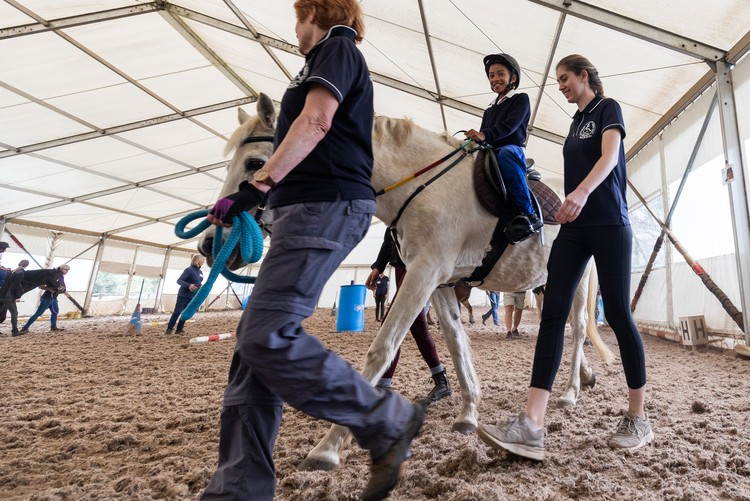
At SARDA, horseback riding offers children with physical and intellectual disabilities far more than recreation. It gives them confidence, freedom, and therapeutic benefits.
“It’s the psychological shift of being able to look down at people from a horse, instead of up from a wheelchair. That’s the brilliant part of it,” says Mel van der Spuy, a physiotherapist at the South African Riding for the Disabled Association (SARDA).
Founded in 1973 by Joy Findlay and Belinda Sampson, SARDA began in a backyard with a simple vision to use horseback riding as therapy for children with disabilities. The organization quickly grew and moved to a larger facility in Constantia Valley in 1981 to meet the increasing demand. Today, SARDA has 14 specially trained horses at its Constantia school and runs similar programs across South Africa.
Every week, over 150 children from 15 special needs schools participate in therapeutic riding sessions. Many of these children face challenges such as autism, cerebral palsy, and physical impairments, with some having lost limbs due to gang violence. Despite the program’s success, there remains a waiting list for new participants.
The therapy sessions are free of charge, funded through donations, grants (including support from the National Lotteries Commission), and fundraising events like open garden days and tin collections. According to Bee Lukey, SARDA’s Public Relations and Office Manager, nearly 10,000 children have benefited from the program over the years.
Occupational therapist Hannelie Janse van Rensburg from ASTRA Special School in Montevideo frequently brings her learners to SARDA. Many of these children come from disadvantaged communities, such as Delft, Bonteheuwel, and Ceres.
“They come from low socio-economic backgrounds. Most don’t have fathers and live with foster parents. Just visiting SARDA, greeting the horses in the morning, being in nature, and riding is a tremendous emotional boost for them,” she shares.
Before starting the program, each child undergoes an assessment by a medical professional to ensure that riding is appropriate for them. Most participants stay in the program for about four years, during which therapists often observe significant improvements in their physical and emotional development.
Ten-year-old Claudia Van Wyk, who has cerebral palsy diplegia, exemplifies this progress. As she rides around the paddock, she gains not only physical strength but also the joy and pride of being in control.
According to SARDA physiotherapist Dawn Goodley, horseback riding mimics the natural motion of walking. “For some children with cerebral palsy, this is the first time their muscles are actually working the way they’re meant to,” she explains.
Safety is a top priority at SARDA. Each rider is accompanied by three trained volunteers: one leads the horse while two walk alongside the child. “No child has ever fallen,” says Lukey, crediting SARDA’s dedicated team of over 100 volunteers for their crucial role.
In a world where many of these children face daily limitations, SARDA offers something extraordinary. A sense of possibility, independence, and pride all from the saddle of a horse.