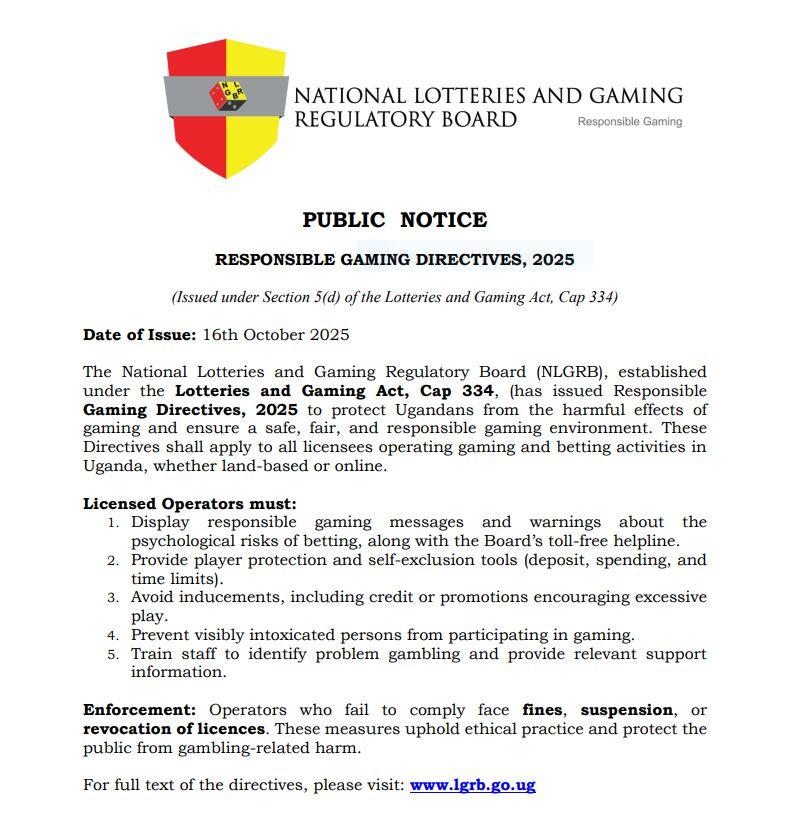
The National Lotteries and Gaming Regulatory Board (NLGRB) has released the Responsible Gaming Directives, 2025, under the Lotteries and Gaming Act, Cap 334. These directives introduce comprehensive measures aimed at enhancing player protection, promoting ethical practices, and ensuring accountability within Uganda’s growing gaming industry.
As both online and land-based gaming continue to expand rapidly, the new directives are designed to safeguard citizens from gambling-related harm and to establish higher compliance standards for operators. The NLGRB emphasizes that responsible gaming is crucial for creating a sustainable and safe environment for all Ugandans.
Framework for Responsible Gaming and Player Safety
- Mandatory Responsible Gaming Messages: All gaming operators must display clear messages that promote responsible gambling.
- Self-Exclusion & Restricted-Person Registers: Players wishing to limit or stop their gambling activities can voluntarily self-exclude. Operators are required to maintain registers to prevent at-risk individuals from accessing their services.
- Prohibition of Credit and Inducements: Operators are banned from offering credit or incentives that could encourage irresponsible gambling behavior.
- Protection of Minors and Vulnerable Persons: Strict measures will be enforced to prevent underage gambling and protect vulnerable populations.
- Tough Penalties for Non-Compliance: Operators who violate these directives will face significant penalties to ensure adherence.

“These directives represent a major step forward in our commitment to protect the public from the potential harms associated with gaming while fostering a well-regulated and transparent industry,” said Mr. Kenneth Kitariko, Chairperson of the NLGRB. “We are setting a new benchmark for responsible gaming in Uganda, ensuring that operators uphold the highest ethical standards and prioritize player welfare.”
The Responsible Gaming Directives, 2025 are part of the NLGRB’s ongoing efforts to balance industry growth with public safety. Stakeholders, including operators, industry associations, and players, are encouraged to familiarize themselves with the new requirements.