



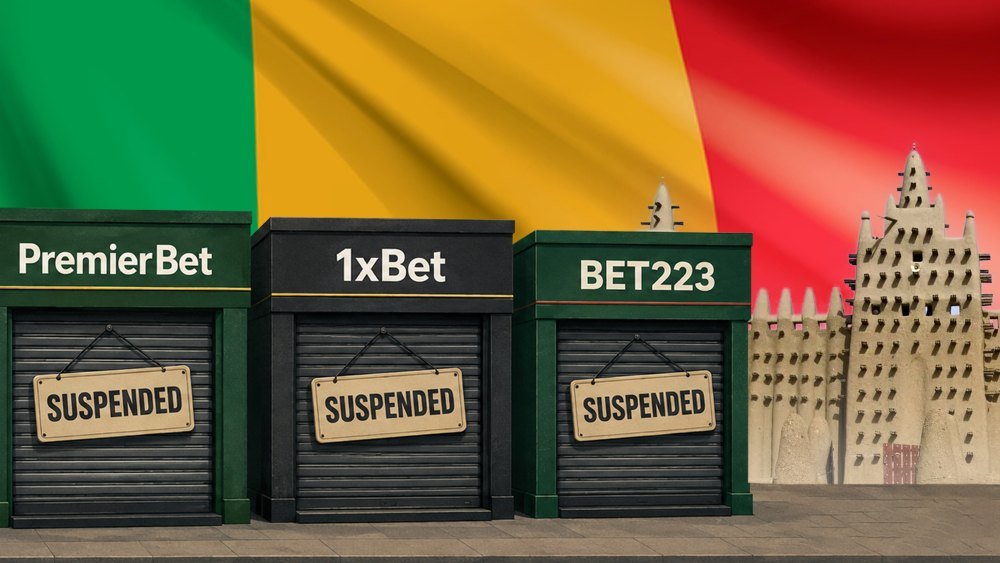
All Online Gambling operators in Mali, including PremierBet, 1xBet, and BET223, have suspended their operations following the implementation of a new tax on players’ gambling winnings, citing challenges in operating under the country’s revised tax framework.
The suspension comes amid growing tensions between licensed Online Gambling operators and Malian authorities following the introduction of a new tax on gambling winnings under the country’s 2026 Finance Law. According to industry reports, the measure applies to winnings from products including sports betting, virtual sports, online casino games, and lottery prizes, and forms part of broader fiscal reforms aimed at increasing public revenue from the gambling sector.
Meanwhile, the precise provisions of the tax have not been independently verified through official government publications. According to reports, the affected operators said the new tax has significantly altered the commercial environment, making it increasingly difficult to continue operating under the current regulatory framework.
The companies argue that the measure creates substantial financial and operational challenges, particularly in administering player payouts, processing taxable winnings, and complying with the revised tax requirements. While the operators have suspended their services, there has been no indication that the closures are permanent, neither the companies nor Malian authorities had announced a timeline for when operations may resume or whether formal discussions are underway regarding the implementation of the new tax regime.
The tax represents one of Mali’s most significant recent fiscal reforms affecting the regulated gaming sector. The government has positioned the measure as part of a broader effort to strengthen domestic revenue collection by bringing gambling winnings more fully into the national tax system.
Similar tax reforms have been introduced in several African jurisdictions in recent years as governments seek to increase revenue from rapidly expanding regulated gaming markets. However, licensed operators contend that the additional tax burden places considerable pressure on an already competitive industry. They argue that higher taxes on winnings reduce player returns, increase operational complexity, and may ultimately affect the long-term sustainability of licensed betting businesses.
The suspension of operations by several major bookmakers is expected to affect thousands of players across Mali who rely on retail betting outlets and online platforms to participate in sports betting and other gaming activities. Punters may experience temporary disruptions in placing wagers, claiming winnings, withdrawing funds, and accessing their gaming accounts while the affected operators remain offline.
The longer-term impact on pending payouts and other gaming services remains unclear, as the operators have yet to provide detailed guidance regarding the suspension. The development also raises broader questions about the future of Mali’s regulated betting market. Industry observers note that if licensed operators remain offline for an extended period, some players could turn to unlicensed or offshore betting platforms, potentially undermining regulatory oversight, consumer protections, and government tax collection.
Mali’s new tax dispute reflects a broader trend across Africa, where governments are reviewing gambling legislation, licensing frameworks, and taxation policies to strengthen oversight of the sector while generating additional public revenue. In recent years, countries including Kenya, Ghana, Uganda, and Nigeria have introduced or revised gambling-related taxes affecting operators and players.
While governments view such measures as an important source of revenue, industry stakeholders have continued to debate how higher taxation may influence player participation, operator investment, and the competitiveness of regulated markets. For betting operators, the situation in Mali underscores the importance of regulatory certainty and balanced fiscal policies.
Significant changes to gambling taxation can influence business models, investment decisions, and long-term market participation, particularly in emerging gaming jurisdictions where operators continue to invest in retail and digital expansion. As of publication, Malian authorities had not announced any revisions to the tax policy in response to the operators’ decision to suspend services.
Likewise, the affected betting operators have not confirmed when they expect to resume operations. The outcome of the dispute is likely to be closely watched across Africa’s gaming industry, as it may influence future discussions around gambling taxation and the balance between government revenue generation and maintaining a sustainable, competitive, and well-regulated betting market.


DRC Showcases Technology-Driven Gambling Regulation
August 4, 2026[…] Jeux d’Argent (CSJA), the DRC delegation presented the country’s approach to strengthening gambling supervision, improving public revenue mobilization, protecting players and promoting greater […]
ISJ and INAC Strengthen Cooperation to Stop Underage Gambling
August 4, 2026[…] the foundations for greater collaboration in preventing children and adolescents from accessing gambling […]
NWGB Raises Gambling Awareness Among North-West University Students
August 4, 2026[…] highlighted the importance of collaboration between educational institutions and responsible gambling organizations in promoting student well-being, preventing gambling-related harm and helping young […]